


There’s nothing quite like running your brand new website through Google’s speed test and watching it come back with 79.
Seventy-nine out of 100, on mobile, on the site of a company that tells other people how to build fast websites. We had only just launched it. It looked great on my screen, and it felt quick on my connection. Google’s test uses a mid-range phone on a slower network, which is much closer to how a lot of Ugandans will actually meet it, and that phone was not impressed.
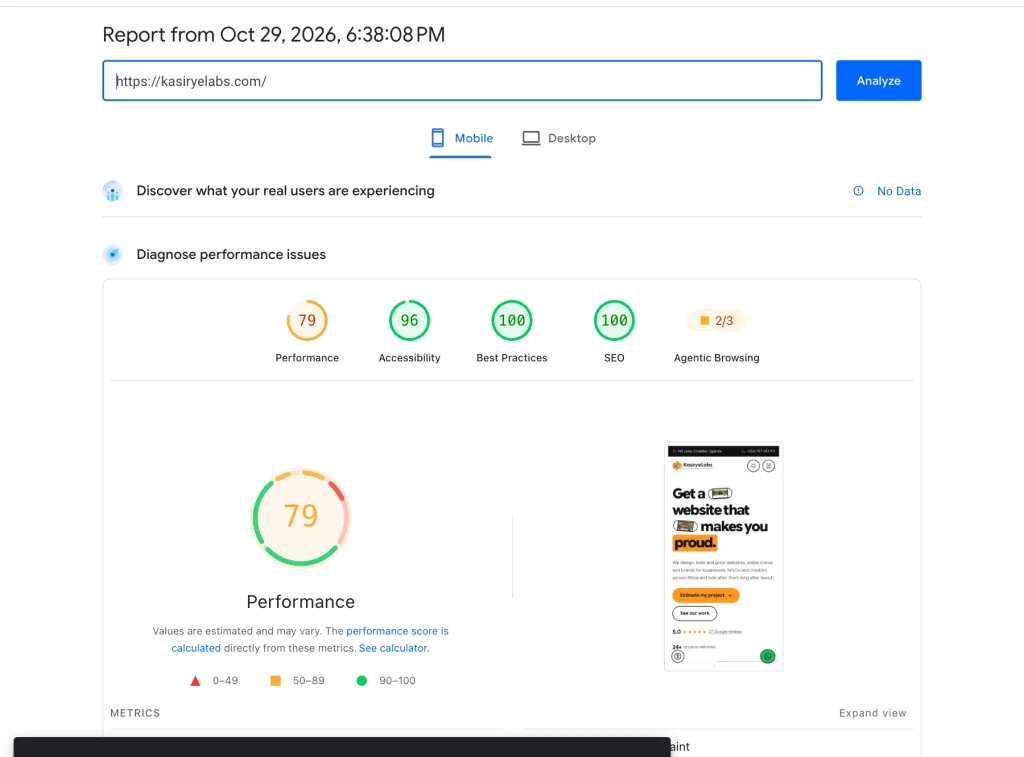
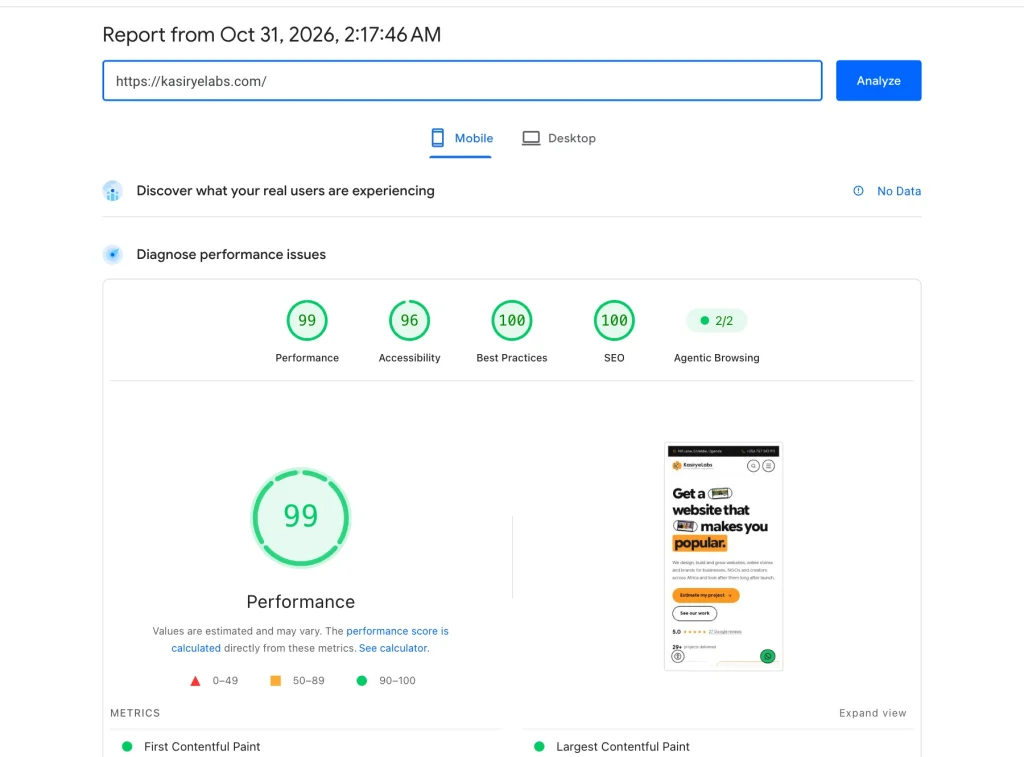
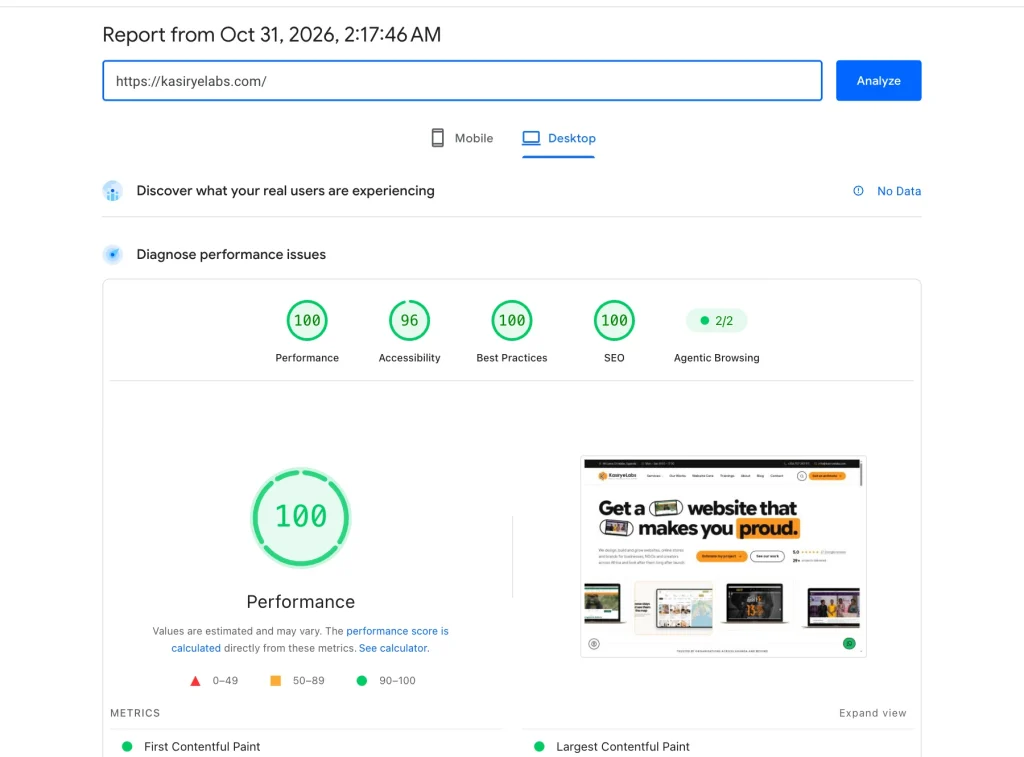
So we went looking. After the changes below, the same test gives our homepage 99 to 100 on mobile and 100 on desktop. The score moves a little from one run to the next, but that’s a very different website, and the main content now appears in about a second on that test phone.
None of the problems were exotic. That’s why I’m writing this down: your site probably has some of the same ones.
We were loading Google’s tracking code twice
Two separate things on our site were each adding the Google tag. Nobody chose this. One plugin did it quietly and our theme did it too. Tracking scripts are heavy, and they were competing with the page itself right when a visitor was waiting for it. We removed the duplicate.
We made the tracking wait
Then we went further. Now the tag waits until the visitor interacts with the page, or about four seconds after it loads, whichever comes first.
This one has a real cost, so I’ll be straight about it. Someone who lands and leaves within those first seconds, without touching anything, may not show up in our analytics. I’m fine with that. I’d rather serve the visitor who is here than perfectly count the one who already left. You might weigh that differently if your reports matter more to you, and that’s a fair choice.
Our headline was hiding behind an animation
This was the embarrassing one. The big homepage title had a lovely entrance animation, which meant it stayed invisible until the animation code had loaded and started. On a fast connection you’d never notice. On a slower phone, the most important words on the page simply weren’t there yet.
We changed it so the title is visible from the very first moment, and removed one of the animation libraries altogether. Nobody has ever hired a web agency because a headline slid in nicely.
Our images were bigger than the screen
A phone doesn’t need the same image as a large monitor, but a browser needs telling which size to pick. Some of ours were missing that instruction, so phones downloaded more than they needed. A small fix in the code, and on mobile data it saves your visitor real money as well as time.
Every visitor was making the server build the page from scratch
WordPress normally assembles each page when someone asks for it. That’s a lot of work to repeat for a page that hasn’t changed since the last visitor. So we keep a ready-made copy of each public page on the server, and it’s handed straight over. When we change something, the copy is cleared automatically. We also told browsers to keep files like images, so returning visitors don’t download them again.
We keep our fonts on our own server too, so a phone doesn’t have to make an extra connection to Google just to show text.
What I’d take from this
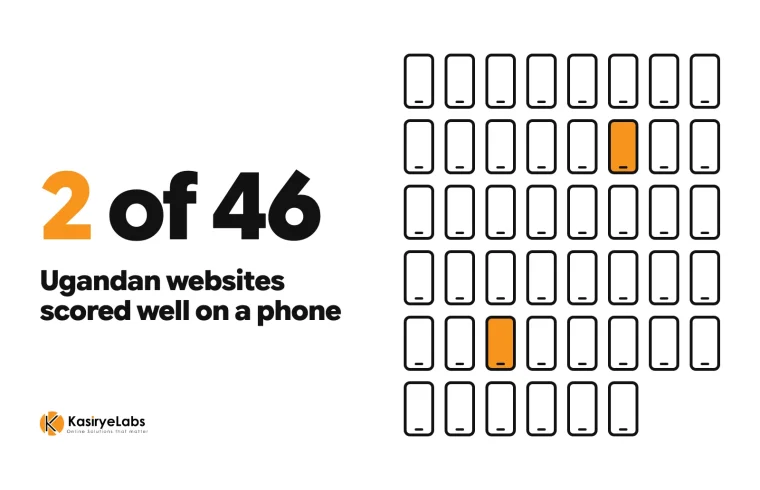
First, your own laptop is a terrible judge. Test on a phone, on mobile data, or use Google’s free PageSpeed Insights.
Second, don’t chase the number for its own sake. We’re happy with ours, but we got there by fixing real problems, not by trying to impress a test. A score isn’t a customer. What you want is a page people can read and use quickly on the phone in their hand.
Third, look for the plugins you forgot about. Most slow sites aren’t slow because of one big mistake. They’re slow because of ten small things that each seemed harmless.
Want to see where yours stands? Our free health check includes Google’s mobile and desktop speed scores, along with fixes in plain English. If the number stings, you’ll be in good company. Ours did. And if you’d rather hand the whole thing over, keeping sites fast is part of Website Care.




Comments
No comments yet — start the conversation.